
EWC Gunsmithing instructor brings experience, new vision to program
EWC Gunsmithing instructor brings experience, new vision to program
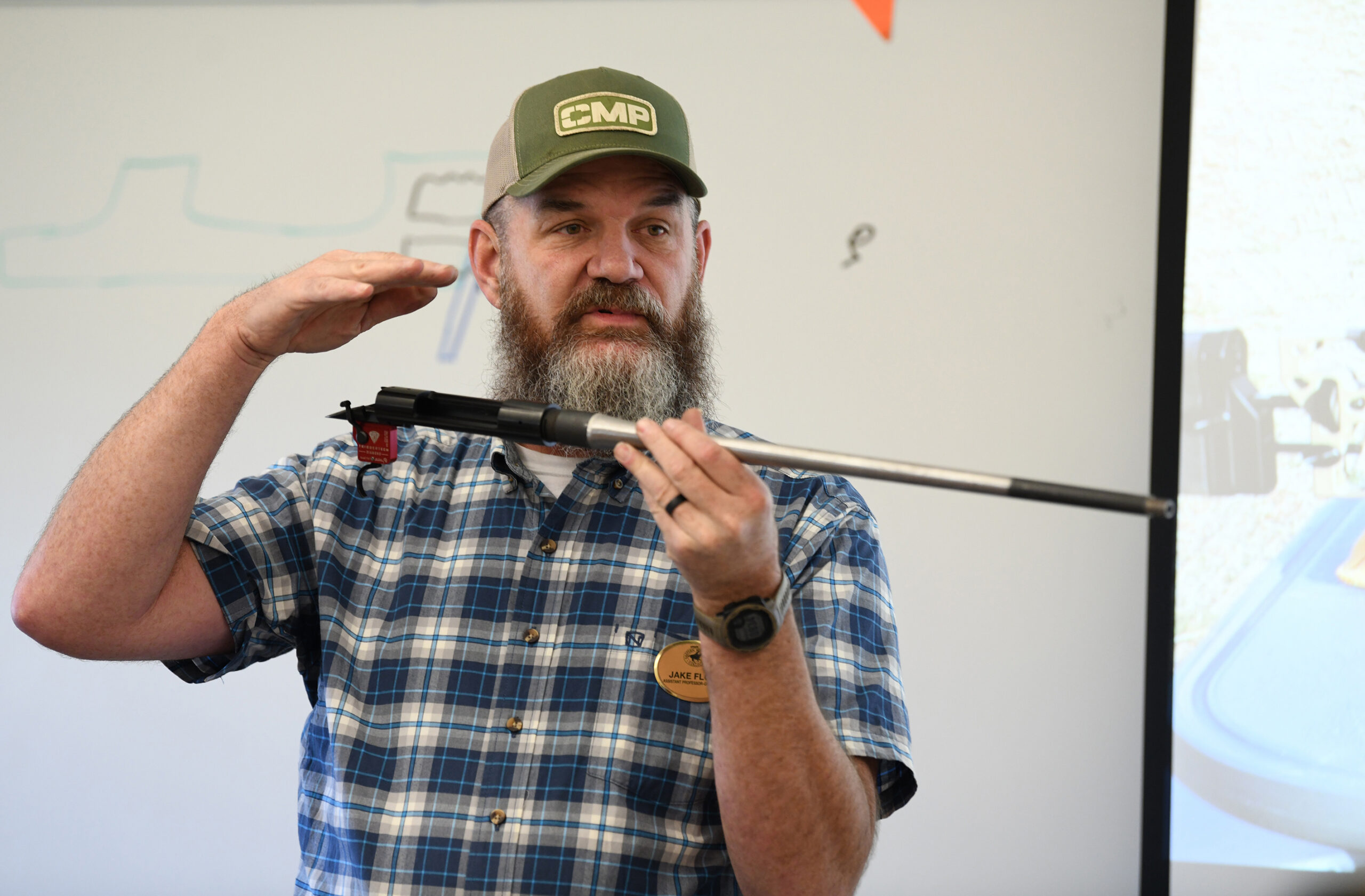
DOUGLAS, Wyo. – After more than two decades in the U.S. Marine Corps and nearly 25 years of experience working in gunsmithing, Jake Floyd has brought a wealth of industry experience and a new philosophy for teaching, to Eastern Wyoming College’s Gunsmithing program.
Floyd joined EWC this fall after teaching gunsmithing at Lassen Community College in California, where he worked as a full-time adjunct instructor beginning in 2021. He taught everything from general firearm repair to custom rifle building.
From ranch life to the Marine Corps
Floyd grew up on a cattle ranch in eastern Oregon and joined the Marine Corps after graduating from high school. He served for 22 years before retiring in 2017.
While stationed at 29 Palms, California, in 1999-2000, Floyd met gunsmith Scott Edwards at RSE Custom Guns. Floyd began working with Edwards as an apprentice and eventually became a paid employee, working with him on and off for about 20 years.
While transitioning out of the Marine Corps, Floyd started his own business, Jake’s Long Range Customs. He also attended Lassen Community College, which at the time had the oldest gunsmithing program in the country, earning a degree in gunsmithing.
After leaving the Marine Corps, Floyd began teaching at Lassen in 2021 in the full-time program and the Summer NRA program as an Adjunct Instructor.
When Lassen eventually closed its gunsmithing program, Floyd began looking for a new opportunity.
“I saw a job posting for EWC on the internet one night and emailed Glen,” Floyd said.
The response was almost immediate.
“I think it was the fastest response I’ve ever gotten,” he said.
At 6 a.m. the next morning, Floyd said, then-EWC Gunsmithing instructor Glen Morovits (former EWC Gunsmithing instructor) called him to talk about the program. Floyd eventually completed a Zoom interview followed by an in-person interview and was offered the position.
“I applied, did a Zoom interview, then an in-person interview,” he said. “They offered me the job and here I am.”
Floyd said he was impressed by the welcome he received when he arrived on the Douglas campus.
“When I arrived, I was welcomed with open arms,” he said. “The staff here on the Douglas Campus are amazing.”
“Brilliance in the Basics”
Floyd recognizes there is work to be done to modernize the program, including upgrading some of its machinery and equipment. But he also sees significant potential.
His vision can be summed up in three words: “Brilliance in the Basics.”
Floyd’s approach to teaching centers on giving students a strong foundation in both the technical and problem-solving aspects of gunsmithing.
The program focuses on four primary areas: critical thinking, gunsmith machining, firearm repair and modification, and shop practices.
Floyd said critical thinking is an important part of preparing students for careers in gunsmithing because they must be able to work through problems and determine effective solutions. He said critical thinking is a vital skill that is not always emphasized in traditional classroom settings.
Students also receive hands-on training in gunsmith machining, learning not only how to operate machinery but also how to maintain it. The program provides instruction in manual machining while introducing students to the principles of computer numerical control, or CNC, machining.
Those machining skills can provide students with opportunities beyond the gunsmithing industry, Floyd said, giving them technical experience that can transfer to other manufacturing and machining careers.
In firearm repair and modification, Floyd’s teaching philosophy centers on helping students understand the fundamentals of firearms through three areas: design, function and repair. Students also learn the shop practices necessary to work safely and effectively in a professional environment.
Morovits said Floyd has brought his own strengths and experience to the program while continuing the established foundation.
“He’s working out great,” Morovits said. “His strengths are different than mine. Under his leadership, the program is going in the right direction. What I started, he is taking to the next level.”
“So often we force-feed students with so much and only our way of doing things,” Floyd said. “We need to take a step back to the basics.”
Mastering the fundamentals prepares students to adapt to different approaches once they enter the workforce, he added.
“Our way is only one way of doing things,” he said. “If you go into the industry and only know our way, and the place you go to work does it differently, you are at a disadvantage.”
Instead, Floyd wants EWC graduates to understand the principles behind what they are doing so they can continue learning throughout their careers.
“If you are brilliant in the basics, you can adapt, grow and succeed,” he said.
The foundation of that philosophy is understanding why a firearm was designed the way it was, how it functions and how to repair it.
“The key to brilliance in the basics is to focus on design, function and repair,” Floyd said. “The students must know how and why the firearm was designed and its function.”
Students see the difference
That philosophy is already resonating with students.
First-year student Logan Hallmark of Florence, Texas, said he has been impressed by what he has learned in his first few weeks in the program.
“I think the program has been incredible so far,” Hallmark said. “I’ve learned more than I thought was possible in just three weeks.”
Second-year student Emmett Coxbill of Torrington said the program provides a strong foundation for students interested in the field.
“I love the program,” Coxbill said. “It is a great way to learn gunsmithing; design, function and repair.”
Coxbill studied under Morovits and said Floyd brings a somewhat different approach.
“It is different than how Glen (Morovits) taught,” Coxbill said. “I enjoyed Glen and I think I’ll enjoy Jake as well.”
Coxbill also said EWC offers an attractive opportunity for students interested in pursuing gunsmithing as a career.
“EWC’s gunsmithing program is a great place, with the scholarships, it is a great place to go,” he said.
Building for the future
Floyd said one of his goals is to strengthen the program’s relationships with the gunsmithing and shooting industries. He wants industry professionals to provide input on the skills they need from graduates so EWC can keep its curriculum relevant.
“There are always other ways out there to do things,” Floyd said. “What one person does is not the only way to do it. But if we can master the basics, everything else will fall into place.”
Ultimately, Floyd wants EWC students to leave the program prepared to enter the workforce while understanding that learning does not end with graduation.
“Oftentimes we tell a student they are a gunsmith when they graduate, but they are a student still learning,” he said. “They may think they know everything, but others may do things a little different.”
His goal is to produce graduates who have refined fundamental skills and the ability to continue developing their craft.
Floyd believes EWC’s location and program could position it for significant growth, particularly by attracting students from throughout the western United States.
“This program at EWC could become a huge success,” he said. “We need to target students west of the Missouri River.”
Looking five years ahead, Floyd said he could envision the program outgrowing its current facilities and needing a new building to accommodate increasing enrollment.
He is also looking beyond the traditional academic year.
For summer 2028, Floyd is planning a full schedule of summer programs ranging from basic firearm repair to custom rifle building.
“For the cost of tuition and your components, you leave with a custom-built rifle at the end of the week,” he said.
Floyd and EWC are also considering weekend Community Education offerings covering topics such as pistol instruction, gun polishing and troubleshooting.
Before those plans take shape, Floyd will complete his transition from Oregon to Douglas. His wife, Kristin, and their three children, Riley, 30, Derek, 26, and Addison, 19, remain in Oregon, as does his business.
Floyd said he plans to move his family and business from Prineville, Oregon to Douglas during the summer of 2027. He is currently looking for both a home and a location for his business.
For now, his focus is on his students and building the foundation for the future of EWC Gunsmithing.
“The future is bright,” Floyd said.
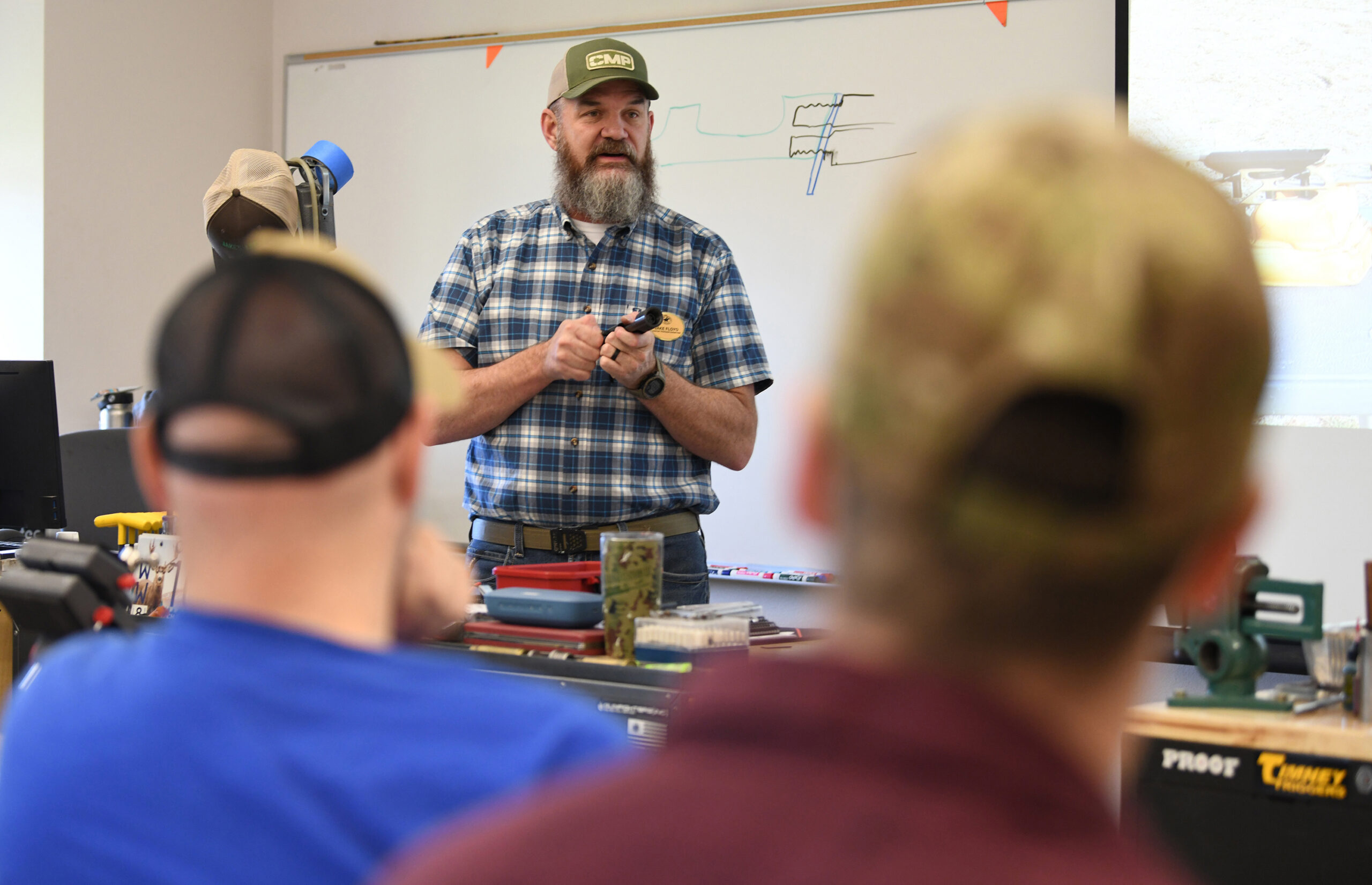
Bearded man in a plaid shirt and cap speaks to a classroom, holding a small object, while two people in caps listen in the foreground. Workshop tools and diagrams are visible in the background.
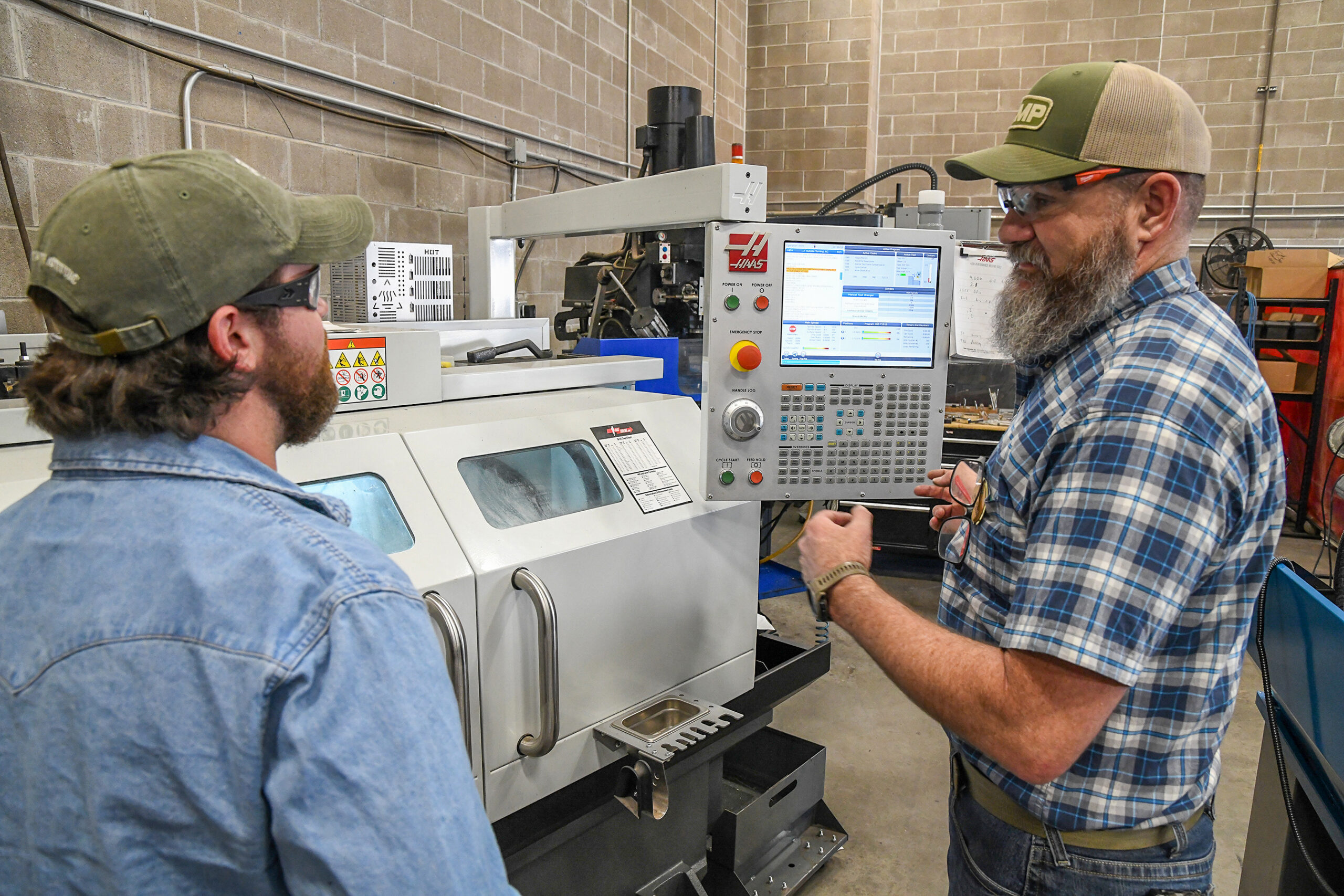
Two men wearing safety glasses and hats operate a CNC machine in an industrial workshop. One man points at the control panel screen while explaining the process to the other.
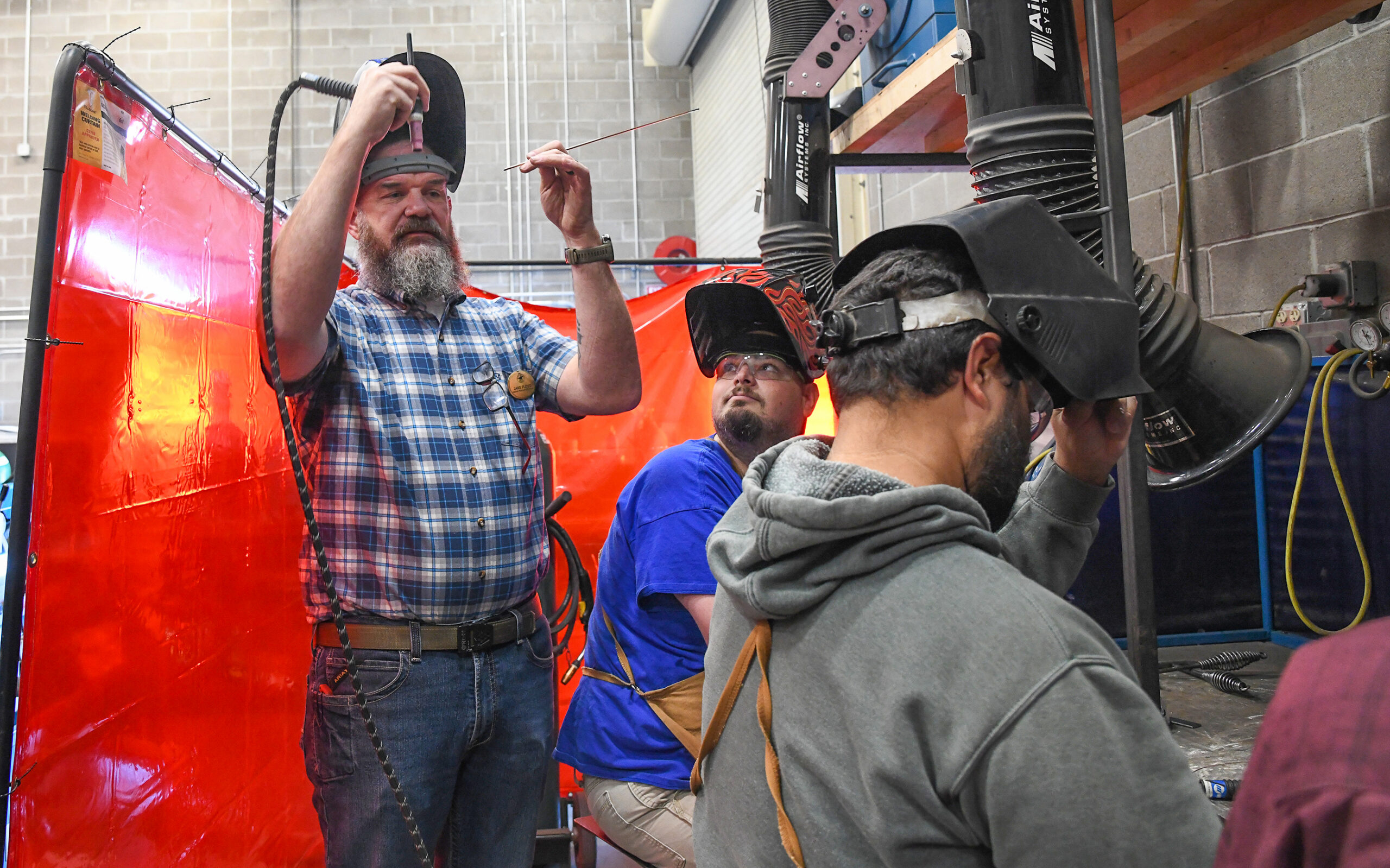
Three people in welding helmets work in an industrial workshop. One man in a plaid shirt stands adjusting his helmet, while two others sit and prepare to weld. Red safety screen and equipment are visible in the background.